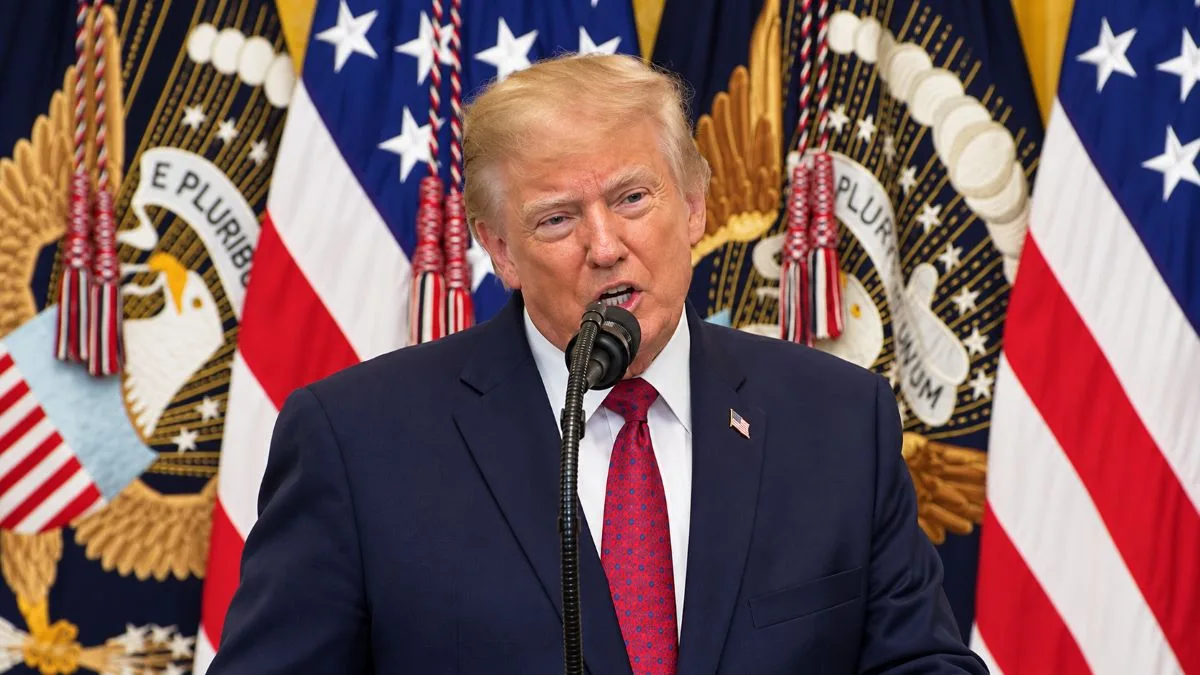
The final month of the 2026 midterms is beginning to organize itself around a simple question: can Republicans spend, campaign and message their way around the political conditions they have not been able to change?
Three developments over the last twenty-four hours point in the same direction.
1. REPUBLICANS HAVE THE MONEY — AND NEED IT
Republican-aligned organizations enter the closing stretch with an enormous financial advantage. The Associated Press reports that roughly $1 billion is available across a network of groups, with Trump-aligned MAGA Inc. holding one of the largest reserves.
The headline number sounds intimidating for Democrats. The deployment pattern is less reassuring for Republicans.
GOP money is pouring into races and states that, under friendlier national conditions, would not require this level of protection. That includes huge spending in Texas and other places Donald Trump carried comfortably in 2024.
The cash can keep candidates alive. It can define opponents. It can pay for turnout. But it also reveals where Republican strategists believe the danger is real.
THE SIGNAL: the Republican advantage is financial. The Democratic advantage, at least for the moment, is that Republicans are spending some of that money defending territory rather than expanding the map.
2. TRUMP IS TAKING THE ECONOMY ON THE ROAD
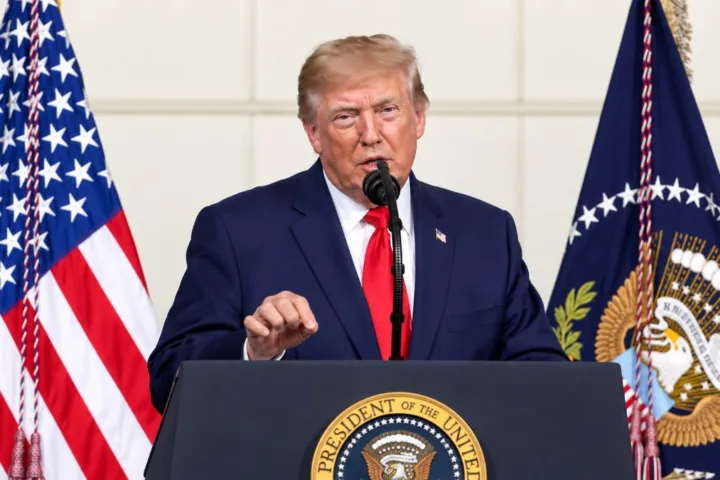
Trump traveled to Maryland to promote a major Anduril investment at the Sparrows Point industrial site, part of a broader White House effort to put the president in front of factories, shipyards and large investment announcements.
The strategy is easy to understand.
Voters continue to identify costs as a major concern. High fuel prices and broader inflation anxiety have complicated the administration’s claim that the country is in a new period of prosperity. Trump’s answer is to make the investment itself visible: buildings, machinery, jobs, ships, factories.
It is the politics of physical proof.
The difficulty is that macroeconomic accomplishment and household experience are not the same thing. A voter can believe a new factory is good and still believe the weekly budget is bad.
That gap is now one of the most important political spaces in the election.
3. SUSAN COLLINS IS TRYING TO RUN AS HER OWN PARTY
In Maine, Republican Sen. Susan Collins spent her first debate with Democrat Troy Jackson emphasizing how often she has broken with Trump.
She pointed to disagreements over tariffs, immigration enforcement and military policy. Jackson’s job was the opposite: collapse the distance Collins is trying to create and make her answer for the consequences of Republican power, including her vote to confirm Brett Kavanaugh to the Supreme Court.
The exchange captures the strategic problem facing vulnerable Republicans better than almost any campaign memo could.
They need Trump’s voters without allowing Democrats to make every local race a referendum on Trump.
Collins has decades of experience building an independent identity. If even she must spend a debate repeatedly defining her distance from a Republican president, candidates with weaker personal brands have a harder task.
4. THE ECONOMIC NUMBERS ARE STILL REFUSING TO BECOME SIMPLE
New trade data added another complication. The U.S. trade deficit widened sharply in August as imports reached a record level, according to Reuters.
That creates an obvious political contradiction for a president who has repeatedly used the trade deficit as evidence that the United States is being taken advantage of.
But the numbers also require care. Strong imports partly reflect inventory rebuilding and capital investment, including spending connected to artificial-intelligence infrastructure. And the year-to-date trade picture remains better than the comparable period a year earlier.
In other words: the monthly number is politically awkward, but it is not a clean verdict on the tariff strategy.
WHAT TO WATCH
The Republican campaign now has three resources to deploy: money, Trump and time.
Money is abundant. Trump is campaigning aggressively. Time is the one resource that cannot be replenished.
Watch where the next wave of Republican spending goes. A dollar spent in a surprise state tells you more about internal concern than a public statement from a campaign manager.
Watch vulnerable Republicans when Trump offers to campaign with them. Their answer will reveal whether they believe his presence adds more turnout than opposition.
And watch the economic message. If the White House continues emphasizing large industrial projects while voters remain focused on everyday prices, the closing month may become a contest between visible investment and lived cost.
ONE MORE NUMBER TO WATCH
The final month is also a test of campaign efficiency. Republicans may finish the cycle spending more money per protected seat precisely because the late defensive scramble has pushed them into expensive media markets. That does not mean the money is wasted. It means the party should judge success by seats saved, not dollars raised.
If the spending works, strategists will call it proof that financial superiority mattered. If it does not, the more uncomfortable conclusion will be that the national environment had become too expensive to reverse.
THE INSIDER BOTTOM LINE
Republicans do not have a resource problem.
They have a translation problem.
They must translate money into persuasion, Trump’s personal following into votes for other candidates and national investment announcements into household optimism.
The next four weeks will show whether any of those conversions is automatic.
Leave a Reply