Susan Collins did not need to say Donald Trump’s name every minute for him to dominate Maine’s first Senate debate.
He was already inside the strategy.
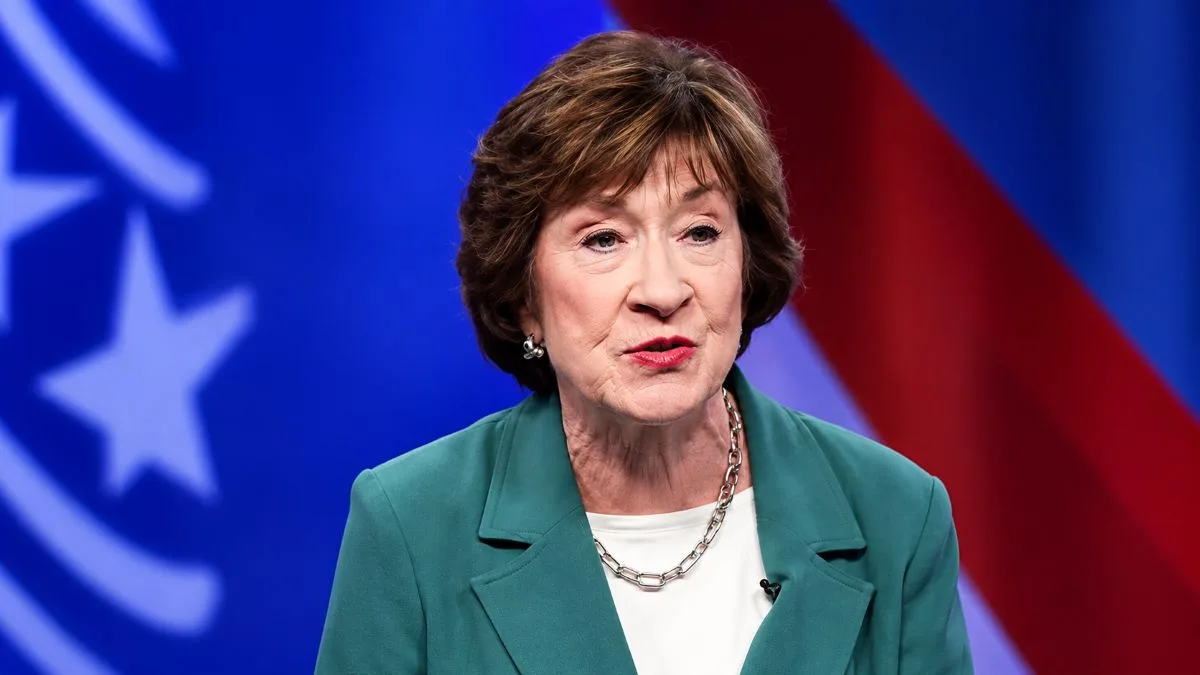
Republican Sen. Collins and Democratic challenger Troy Jackson met for the first of four debates in a race that could help determine control of the Senate. The event quickly became a test of whether Collins can preserve the independent identity that has sustained her career while Jackson turns the election into a judgment on Republican power in Washington.
WATCH THE DEBATE: Susan Collins and Troy Jackson — first Maine Senate debate
THE MOMENT
Collins’ message was clear: do not confuse her with Trump.
She emphasized disagreements with the president on tariffs, immigration enforcement and military policy. She reminded viewers that she has broken with her party repeatedly and cast a vote to convict Trump after January 6.
Jackson’s job was to make those distinctions feel smaller than Collins wanted them to appear.
He returned to the consequences of her votes, especially her 2018 confirmation of Supreme Court Justice Brett Kavanaugh, and argued that voters should judge the senator not only by moments of dissent but by the power she helped Republicans exercise.
That is the entire race in miniature.
WHY THE VIDEO MATTERS
Campaign advertisements can simplify a politician into a caricature.
Debates are harder.
Collins has spent decades presenting herself to Maine voters as a Republican who is not controlled by the Republican Party. Jackson is trying to persuade them that the distinction has become less meaningful in the Trump era.
Watching the candidates make those arguments side by side is more revealing than reading either campaign’s press release.
Collins does not sound like a MAGA candidate because she is not running as one.
Jackson does not need to prove that she sounds like Trump. He needs to prove that her votes helped produce a Trump-shaped Washington.
THE KAVANAUGH PROBLEM
Jackson’s focus on Kavanaugh is strategically important because it attacks the foundation of Collins’ independent brand.
Collins supports abortion rights and has long argued that she evaluates judicial nominees on qualifications and legal philosophy. Her vote for Kavanaugh became much more politically costly after the Supreme Court overturned Roe v. Wade.
She has not said she regrets the confirmation.
For Jackson, that creates a concrete answer to every Collins argument about independence: there are moments when one Senate vote changes national policy for a generation.
For Collins, the response is that senators cannot know every future ruling and that her broader record contains repeated acts of independence.
Voters now decide which definition matters more.
THE TRUMP DISTANCE TEST
The debate also exposed a question facing vulnerable Republicans across the country.
How much distance from Trump is helpful?
Too little and swing voters may see the candidate as part of an unpopular national administration.
Too much and core Republican voters may wonder why they should be enthusiastic.
Collins is unusually equipped for the balancing act because her independent identity predates Trump by decades. A less established Republican would struggle to make the same argument credibly.
That is why Maine matters beyond Maine.
WHAT TO WATCH IN THE NEXT DEBATES
There are three more debates scheduled.
Watch whether Collins continues emphasizing the same breaks with Trump or begins spending more time attacking Jackson’s state-level record.
Watch whether Jackson can move beyond tying Collins to Trump and give voters a positive reason to replace a five-term incumbent.
And watch abortion and judicial nominations. The first debate suggests they will remain one of Jackson’s strongest tools for turning a national issue into a personal argument about Collins’ judgment.
THE BODY LANGUAGE OF THE RACE
Video adds something the transcript cannot. Collins’ strategy depends on steadiness and familiarity; she wants voters to see the same measured, locally rooted senator they have watched for decades. Jackson’s strategy depends on urgency. He wants the race to feel like a moment when continuity has become complicity.
That difference in tone matters in a state where Collins’ personal brand has historically outperformed the national Republican label. Jackson does not merely need better issue positions. He needs viewers to decide that the political era has changed enough that experience is no longer a sufficient reason to keep her.
THE INSIDER BOTTOM LINE
The first debate did not resolve the Maine race.
It clarified it.
Collins is asking voters to believe that her independence is more important than the letter next to her name.
Jackson is asking them to believe that in a closely divided Senate, the letter is what ultimately determines power.
Trump does not have to be on the stage for that argument to be about him.



Leave a Reply