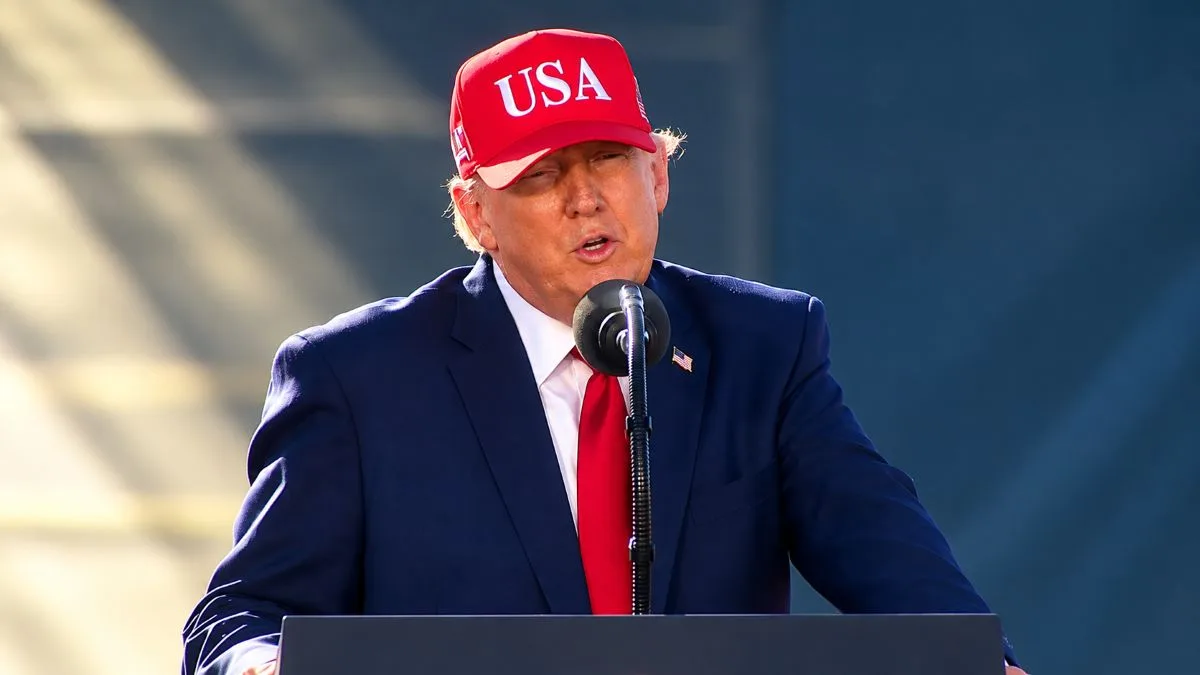
Donald Trump’s closing economic argument has a new stage.
It looks like a shipyard.
At Sparrows Point in Maryland, the president appeared at an industrial site to promote a major Anduril investment tied to the production of components for nuclear-powered submarines. The White House released the full event video, turning cranes, steel, workers and military hardware into part of the political message.
WATCH THE FULL REMARKS: President Trump Delivers Remarks — October 6, 2026
THE MOMENT
The substance of the announcement matters. Anduril is making a multibillion-dollar investment in shipbuilding capacity around the Baltimore-area industrial site, while the federal government is pursuing a broader effort to expand submarine production.
But the politics of the event are just as important as the project.
Trump is entering the final month of a difficult midterm environment with voters still focused on fuel prices, inflation and the cost of living.
Those problems are hard to photograph.
A shipyard is easy to photograph.
So is a factory.
So is a ribbon cutting, a production line or a giant investment number printed on a backdrop.
The White House is trying to convert economic policy into visible evidence.
WHY THE VIDEO MATTERS
Presidential economic messaging is often built around statistics that most voters never encounter directly: growth rates, capital expenditure, productivity, trade balances and investment commitments.
Trump’s political instinct has always been more visual.
He prefers buildings, products, crowds and physical symbols of scale.
The Maryland event fits that instinct perfectly. The setting tells the story before the speech begins: American industry, defense production, large machinery and the promise of jobs.
That makes the video useful beyond the people who watched the event live. Clips can become campaign advertising, social posts and evidence for a broader narrative that the administration is rebuilding domestic production.
THE COUNTER-MESSAGE
The political challenge is that voters can believe two things at the same time.
They can believe new industrial investment is good.
They can also believe their own economic situation is uncomfortable.
That is the gap Trump is trying to close.
Republicans have accumulated an enormous campaign war chest and are spending heavily to defend seats as Democrats attempt to turn the election into a referendum on costs and presidential leadership.
The White House cannot make grocery bills disappear on television.
It can show a shipyard and argue that the economic foundation is stronger than the public mood suggests.
THE INSIDE READ
Watch where Trump travels next.
If the schedule continues moving through factories, construction projects, defense plants and major investment sites, the pattern is deliberate.
The president is not merely campaigning for Republican candidates.
He is building a visual rebuttal to the idea that his economy is failing.
That is also why Democratic responses will focus less on whether the projects are real and more on whether they change what households pay.
Both sides understand that the argument is not “investment or no investment.”
It is “which economic reality should voters prioritize?”
WHAT TO WATCH IN THE CLIP
Listen for the repeated emphasis on scale: the size of the project, the industrial ambition, the jobs and the national-security frame.
Notice the setting behind the president. The location is doing political work.
And notice what is mostly absent from the visual frame: the consumer economy where the administration is more vulnerable.
That does not make the event misleading. It makes it strategic.
THE CAMPAIGN USE
The footage is almost built for repackaging. A long presidential speech can be cut into short clips showing Trump beside industrial workers, submarines, heavy equipment and patriotic staging. Those images can travel through campaign advertising without requiring viewers to understand the details of defense procurement.
That matters because visual politics compresses complicated policy into a single impression. The administration wants the impression to be movement: things are being built, money is being committed and America is producing again.
Democrats will try to force the same viewers back to a different image — the gas pump, the grocery aisle and the monthly bill. The shipyard video is useful because it shows exactly how the White House plans to fight that contest.
THE INSIDER BOTTOM LINE
Trump’s midterm economic message is becoming increasingly physical.
He wants voters to see steel, ships, plants and investment and conclude that prosperity is being built in front of them.
The election may turn on whether that visible future feels more persuasive than the prices voters are paying in the present.
Leave a Reply