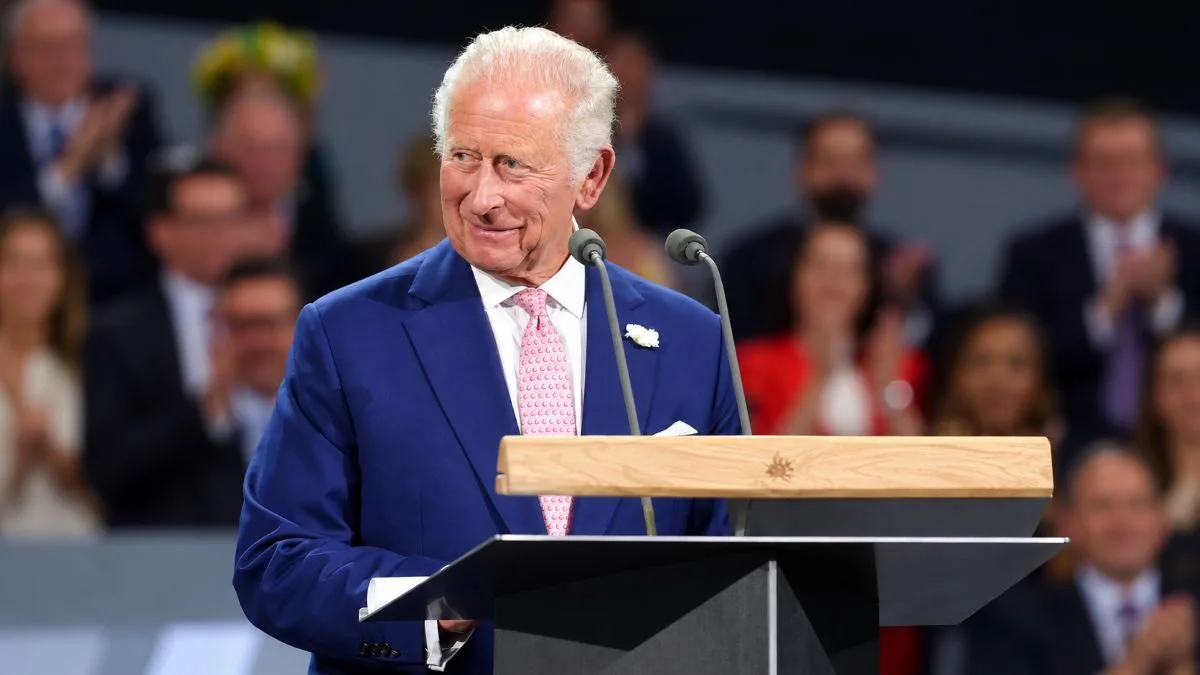
King Charles III did not strip Prince Harry and Meghan Markle of a new privilege. He did not announce another royal exile. He did not rewrite the agreement that has governed the Duke and Duchess of Sussex since they stepped away from official duties in 2020.
That is precisely what makes the latest move from Buckingham Palace so revealing.
A letter authorized by Charles and distributed by the Lord Chamberlain to senior government, military and regional officials reaffirmed that Harry and Meghan remain outside the working monarchy and conduct their charitable and commercial activities in a private capacity. The communication came after the Sussexes returned to live in Britain following roughly six years in the United States. Harry and Meghan were informed only shortly before the correspondence was circulated publicly, according to their spokesperson.
Officially, almost nothing changed.
Institutionally, plenty happened.
A Letter Designed to Remove Ambiguity
The Palace’s central message is simple: Harry and Meghan may once again live in Britain, attend events, operate charities, run businesses and maintain an enormous international profile, but those activities should not be confused with work performed on behalf of the Crown.
The distinction mattered less while the Sussexes were based thousands of miles away in California. Their physical return changes the optics.
A high-profile appearance by Harry at a British charity event can look royal even when it is not. Meghan can enter a room carrying one of the best-known titles in modern celebrity culture without representing the monarchy in any official sense. Organizations dealing with the couple may also have legitimate questions about protocol, security, access and whether public resources should be involved.
The letter addresses that gray zone.
It instructs official organizations to direct questions about courtesies and potential public expenditure back to Buckingham Palace, while security decisions remain the responsibility of the appropriate authorities. The communication was specifically intended to prevent doubt or confusion surrounding the couple’s position.
That is administrative language carrying a political message.
THE INSIDE READ
The real story is not that Charles changed Harry and Meghan’s status.
It is that the monarchy apparently decided the status needed to be said out loud again.
The Sussexes possess something Buckingham Palace cannot switch off: visibility. They remain commercially valuable, globally recognizable and capable of generating extraordinary media attention without appearing on a single official royal rota.
That creates an unusual institutional problem.
The monarchy cannot realistically prevent Harry and Meghan from supporting charities, attending public events or building commercial projects. Nor can it erase Harry’s position as the king’s son or Meghan’s connection to one of the most famous families on earth.
What it can control is the institutional perimeter.
The latest letter effectively reinforces that perimeter: royal blood does not automatically equal royal authority, celebrity does not equal state function, and proximity to Buckingham Palace does not create an unofficial second court.
The distinction is especially important now that the Sussexes are physically back inside the same national media environment as the working royal family.
Security Makes the Boundary More Complicated
The most consequential unresolved issue may not involve titles at all.
It involves security.
A government committee responsible for decisions on royal and VIP protection is expected to consider what level of publicly funded protection Harry and his family should receive now that they have returned to Britain. Harry has spent years challenging the arrangements that followed his departure from official royal duties.
That decision carries consequences beyond personal safety.
Full-time state protection could be interpreted by some as evidence of quasi-official status even if the Palace insists otherwise. Limited protection, meanwhile, could revive the very dispute that complicated Harry’s ability to bring his family to Britain in the first place.
This is why Buckingham Palace’s wording about public funds matters.
The institution appears determined to separate three questions that can easily become tangled together: who Harry is, what Harry does privately, and what the British state owes him because of his position and security risk.
Those are not necessarily the same thing.
William Is Part of the Long-Term Equation
There is also a future-facing dimension.
Charles is king, but Prince William is heir to the throne. The monarchy that eventually passes to William will have to coexist with a Sussex family that remains famous, commercially active and connected to the Crown while existing outside its command structure.
That makes clarity useful now.
William and Catherine represent the future working monarchy. Harry and Meghan represent a different model: royal-adjacent prominence without the obligations, political restrictions or institutional discipline required of working members of the family.
Neither model automatically eliminates the other.
But confusion between them creates headaches for the Palace.
The king’s letter therefore serves not only the monarchy of today but the succession architecture of tomorrow.
THE SIGNAL
Watch how British institutions treat Harry and Meghan at major public events.
That will tell us more than another round of anonymous palace briefings.
Do government departments communicate directly with their office? Are official courtesies extended? Does Buckingham Palace become an intermediary? What security accompanies them? How are they described in formal programs?
Those small details will reveal whether the boundary established on paper is equally firm in practice.
WHAT HAPPENS NEXT
First comes the security decision. That could determine how easily and visibly the Sussexes operate in Britain.
Then comes the public calendar. The more frequently Harry and Meghan appear at prominent British events, the more often the distinction between celebrity, charity and monarchy will be tested.
Finally, watch William. The Palace may have reaffirmed Harry and Meghan’s private status under Charles, but the lasting settlement ultimately needs to survive the transition to the next reign.
THE INSIDER BOTTOM LINE
King Charles did not push Harry and Meghan farther away from the monarchy this week. He did something subtler: he redrew a line that already existed because their return to Britain made that line newly important.
The letter says their status has not changed.
The fact that Buckingham Palace believed everyone needed reminding may be the most important part.
Leave a Reply