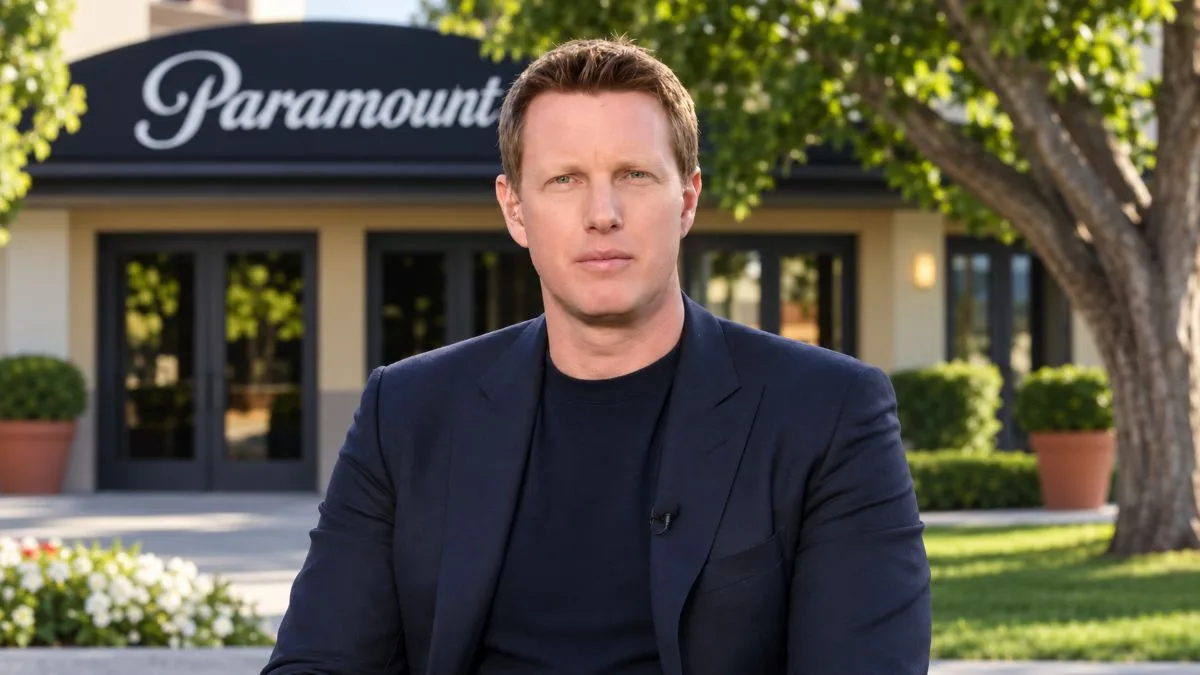
David Ellison’s vision for Paramount is no longer simply about fixing a legacy Hollywood studio.
It is about scale.
The Paramount Skydance chief wants Warner Bros. Discovery, a transaction valued at roughly $110 billion. If completed, the combination would place an extraordinary collection of film, television, streaming, news and intellectual-property assets inside one corporate structure and give Paramount greater weight in a media market increasingly shaped by Netflix, Disney, YouTube and a handful of technology platforms.
California sees something else.
Power.
California Attorney General Rob Bonta and 11 other states have sued to block the merger, arguing that combining the companies would create a media giant capable of raising prices and harming competition. The Writers Guild of America has mounted its own legal challenge.
Paramount has agreed to pause the transaction while the case proceeds.
Now the argument has become even more expensive.
The company is asking a federal judge to require the states challenging the merger to post a $1.88 billion bond, arguing that delays could impose enormous costs if Paramount ultimately wins. A hearing on that request is scheduled for September 24.
This is no longer just an antitrust case.
It is a contest over who gets to decide what scale Hollywood needs to survive.
Paramount Says Bigger Is the Answer
The economic logic behind Ellison’s strategy is easy to understand.
Netflix has global reach, enormous subscriber scale and a business built around streaming rather than protecting declining cable networks.
Disney possesses globally recognized franchises, parks, streaming platforms, television networks and a vast entertainment ecosystem.
YouTube competes for viewing time without bearing the same legacy cost structure as a traditional studio.
Against those forces, another midsized Hollywood company can look vulnerable.
Combining Paramount with Warner Bros. Discovery would create a much larger library, greater distribution power and the potential for substantial cost savings.
Paramount argues that greater scale would make it a stronger competitor.
California is effectively asking the opposite question:
At what point does scale stop producing competition and start eliminating it?
THE INSIDE READ
This case is really about two different definitions of media competition.
Paramount’s definition looks outward.
It sees Netflix, Disney, technology companies and open-video platforms competing aggressively for the same finite hours of consumer attention. From that perspective, putting two traditional media companies together may create a challenger rather than a monopoly.
California’s definition looks inward.
It sees two major Hollywood employers and content suppliers combining control over films, television programming, workers and distribution assets. From that perspective, fewer major buyers of creative labor and fewer major suppliers of premium entertainment can reduce competition even if TikTok and YouTube continue attracting viewers.
Both arguments can be true at the same time.
That is what makes this merger unusually important.
The media industry is consolidating because traditional economics are under pressure.
But the pressure encouraging consolidation does not automatically erase the market power that consolidation creates.
The $1.88 Billion Bond Is About Leverage
The latest legal fight appears technical.
It is not.
Paramount says it faces a $7 million-per-day fee if the merger does not close after September 30. The company projects approximately $1.3 billion in such fees by the time the states’ case reaches its later stages next spring, with additional financing costs possible if the delay stretches farther.
Paramount therefore wants the states to put money behind their attempt to stop the deal.
Bonta argues that Paramount voluntarily agreed to pause the transaction and knowingly negotiated the expensive terms it now cites as justification for a bond.
The bond fight changes the leverage around settlement.
A giant potential financial exposure can make litigation harder to pursue.
California knows that.
Paramount knows California knows that.
Which is why the dispute over the bond has become nearly as strategic as the underlying antitrust case.
Hollywood Is Fighting While the Audience Moves
There is an uncomfortable backdrop to all of this.
Traditional Hollywood can spend months arguing over which studio owns which studio while consumers continue shifting their attention elsewhere.
YouTube accounts for a significant share of U.S. television and streaming usage, while theatrical economics remain increasingly concentrated around a small number of blockbuster films.
That means Ellison is racing two clocks.
The first is legal.
The second is structural.
Even if Paramount wins the right to buy Warner Bros. Discovery, the combined company would still have to compete against platforms whose business models are changing entertainment faster than regulators or legacy studios can reorganize themselves.
Winning the merger would not automatically mean winning the future.
THE SIGNAL
Watch settlement discussions.
Both sides have indicated some openness to resolving the dispute, but California has also signaled that it is prepared to continue toward trial if its concerns are not addressed.
Any concessions involving asset sales, labor protections, pricing commitments or corporate governance would reveal what regulators believe the real danger of the combination is.
Also watch whether Paramount begins speaking less about traditional studio competition and more about YouTube, Netflix and technology platforms.
That framing is central to its strategic case.
WHAT HAPPENS NEXT
The September 24 bond hearing is the immediate milestone.
After that comes the larger antitrust timetable, with litigation extending into next year unless a settlement changes the trajectory.
Meanwhile, the financial meter continues running.
Every month of delay increases the pressure on Paramount to either win, settle or rethink the economics of the transaction.
THE INSIDER BOTTOM LINE
David Ellison believes Hollywood’s old giants need to become bigger to survive the platforms reshaping entertainment.
California believes making them bigger could give one company too much power over audiences, workers and competitors.
Both sides are arguing about a merger.
What they are really fighting over is the architecture of the next Hollywood.

Leave a Reply